
Trois mois après la pose d’un stent, William revient progressivement à la compétition avec une détermination intacte. Entre réadaptation cardiovasculaire, retour à l’entraînement et nouveaux objectifs sportifs, il partage son expérience avec sincérité et lucidité. Dans cet entretien, il évoque son état de santé, les défis physiques et mentaux qu’il a dû surmonter, ainsi que les projets qui continuent de le motiver pour l’avenir.
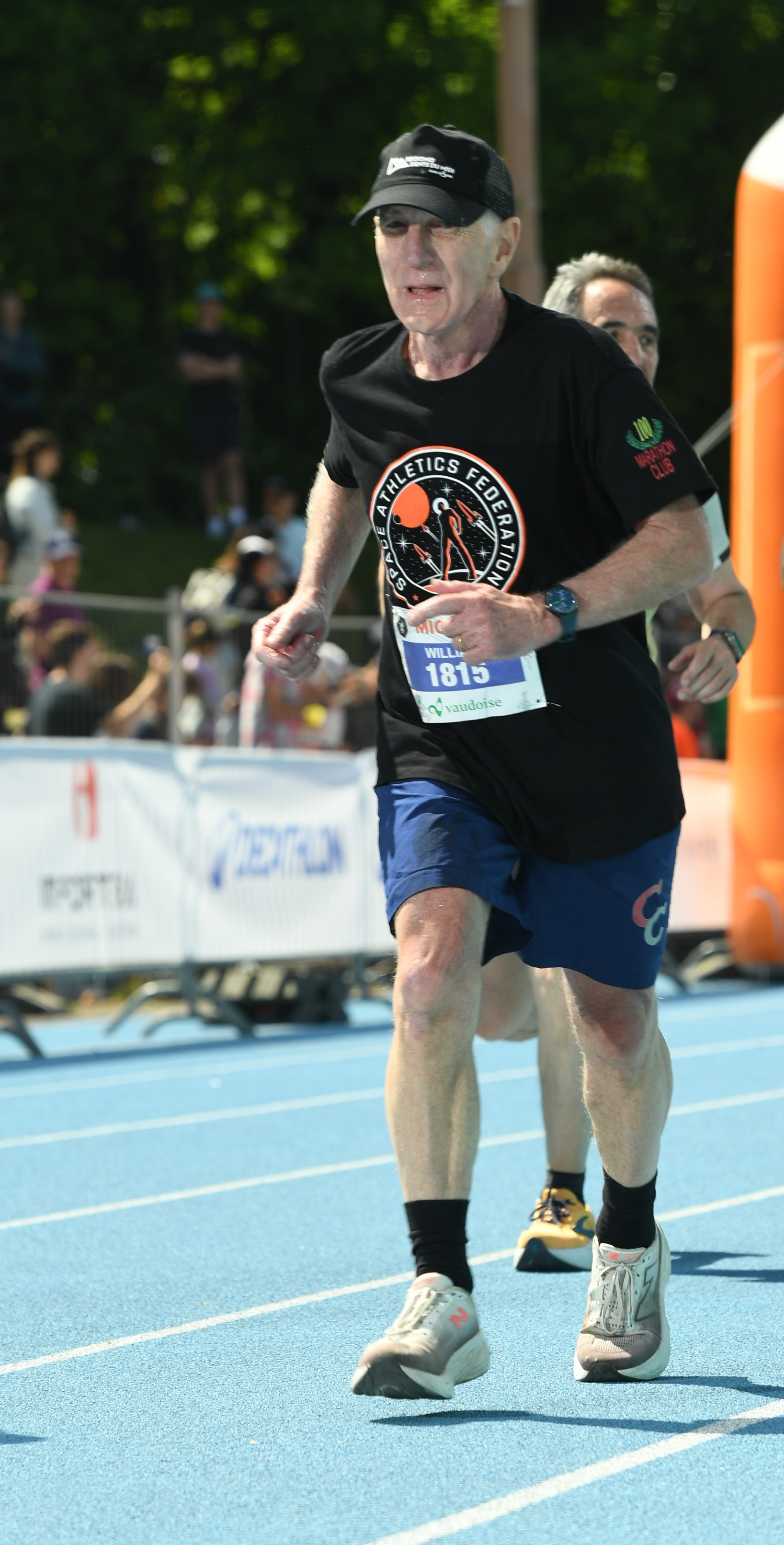
Tout d’abord, comment te sens-tu après la pose d’un stent il y a trois mois?
Je peux dire « très bien », et surtout grâce à l’équipe médicale de cardiologie qui a été, sans aucun doute, la clé du succès!
Tu es encore en pleine période de réadaptation cardiovasculaire. Peux-tu nous expliquer brièvement en quoi cela consiste?
La période s’étend sur trois mois. Chaque semaine, je participe à trois modules : deux séances physiques (cardio + aquagym) et une séance théorique (diététique, stress, etc.).
Comment as-tu vécu mentalement les jours qui ont suivi ton opération?
Je n’ai eu aucun problème. Immédiatement après l’intervention, avec le personnel soignant (cardiologues, physios), nous avons mis sur pied un plan d’entraînement avec des objectifs à atteindre chaque mois.
Quel a été le plus grand défi durant ta réadaptation cardiovasculaire?
Durant les trois premières semaines, le défi principal a été de reprendre confiance en moi. J’ai dû notamment comprendre le mécanisme cardiaque.
Tu as pris la décision d’annuler ta participation au Marathon de Paris (avril) et au Marathon de Sydney (août). Pourquoi?
La date du Marathon de Paris ne me permettait pas de mettre sur pied un entraînement adéquat, alors que Sydney me paraissait trop stressant (heures de vol, décalage horaire).
Tu as néanmoins testé ta forme début avril lors d’une course que tu affectionnes particulièrement : les 20 km de Lausanne, en Suisse.
Oui, j’adore le parcours et l’ambiance. Malgré le fait que les médicaments que je prends limitent ma capacité à soutenir un effort, notamment en montée, le test a été concluant puisque je n’ai « perdu » que deux minutes par rapport à l’année passée.
Qu’as-tu ressenti en franchissant la ligne d’arrivée des 20 km de Lausanne cette année?
J’ai simplement pensé que le test était réussi et que je pouvais continuer ma réadaptation selon ma planification, puis commencer à m’entraîner spécifiquement pour le Marathon de Zermatt (42 km / +2’000 mètres de dénivelé), qui aura lieu en juillet de cette année.
Et l’avenir ? Peux-tu nous dévoiler ta planification pour cette année?
Oui, avec plaisir : les 40 km du Général Guisan (mai), le Marathon de Zermatt (juillet) et enfin le Marathon de Dijon (octobre).
Y a-t-il une course ou un objectif sportif qui te fait particulièrement rêver pour l’avenir?
Il est prévu que je participe au Marathon des glaces, dans le nord de la Suède, en février 2027. Ensuite, pourquoi pas une course extrême à nouveau dans le désert. Attendons de voir comment mon corps va se comporter jusque-là!
Est-ce que cette expérience a changé ta vision du sport et de la compétition?
Être sportif est clairement un atout lors d’une réadaptation cardiovasculaire. Ma vision du sport et de la compétition n’a donc pas changé. Je vais continuer à écouter mon corps!
Quel rôle ta famille et tes amis ont-ils joué dans ton retour à la course?
Le soutien mental a été important, mais le gros du travail, c’est toi qui dois le produire. C’est toi qui dois te fixer des objectifs. Tu es seul avec toi-même.
Nous avons remarqué aux 20 km que tu portais un T-shirt avec un nouveau logo. Que signifie-t-il?
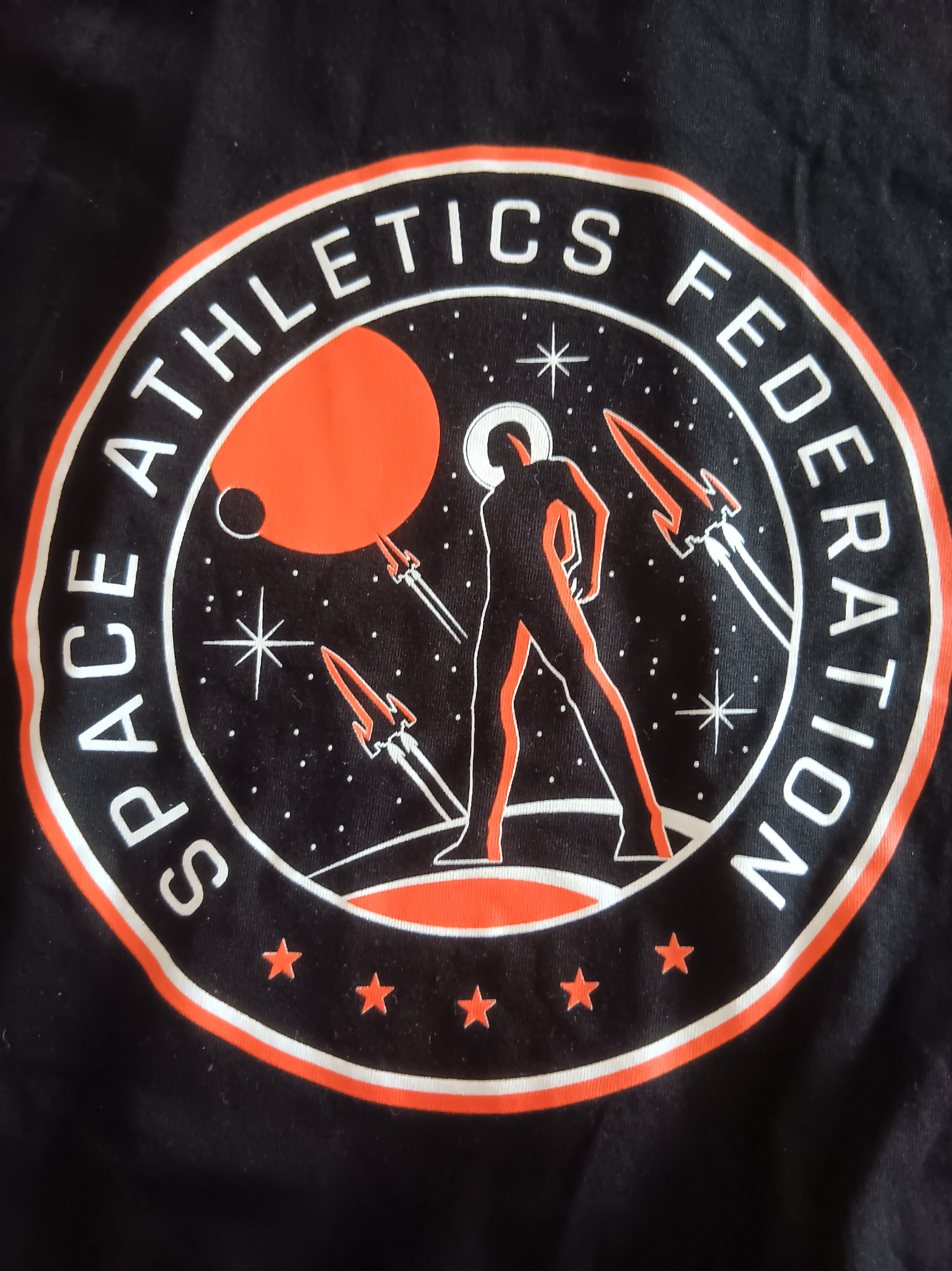
Le logo principal représente la « Space Athletics Federation » (Fédération d’Athlétisme de l’Espace). Cette fédération a pour mission de promouvoir l’athlétisme lié à l’espace et à l’activité physique des personnes impliquées dans les voyages spatiaux. Elle cherche à créer une communauté mondiale autour du concept du sport dans et autour de l’espace. Je trouve le projet particulièrement intéressant et captivant!
Pour plus d’informations : Space Athletics Federation
Souhaites-tu transmettre un message aux personnes qui traversent une épreuve de santé similaire?
Notre corps possède des capacités insoupçonnées pour s’adapter à toutes les situations. Cependant, il faut le respecter et l’écouter, notamment lorsqu’il lance des signes d’alarme. Grâce à ton mental et à ta compréhension médicale de l’épreuve, tu aideras grandement la phase de guérison. Dernier point : ne jamais franchir la zone rouge en tant qu’amateur.
english version below
Three months after having a stent fitted, William is gradually returning to competition with the same determination as ever. Between cardiovascular rehabilitation, training sessions, and ambitious new goals, he shares his experience with honesty and perspective. In this interview, he reflects on his recovery, the physical and mental challenges he faced, and the projects that continue to motivate him for the future.
First of all, how are you feeling three months after having a stent fitted?
I can honestly say “very well,” and above all thanks to the cardiology medical team, who were undoubtedly the key to this successful recovery.
You are still in the middle of your cardiovascular rehabilitation. Can you briefly explain what it involves?
The rehabilitation period lasts three months. Each week, I take part in three modules: two physical sessions (cardio + aquagym) and one theoretical session (nutrition, stress management, etc.).
Mentally, how did you experience the days following your operation?
I didn’t experience any major difficulties. Immediately after the procedure, together with the medical staff (cardiologists, physiotherapists), we established a training plan with monthly objectives.
What was the biggest challenge during your cardiovascular rehabilitation?
During the first three weeks, the main challenge was regaining confidence in myself. I also had to better understand how the heart functions.
You decided to cancel your participation in the Paris Marathon (April) and the Sydney Marathon (August). Why?
The timing of the Paris Marathon did not allow me to prepare properly, while Sydney seemed too stressful because of the long flights and jet lag.
However, in early April, you tested your fitness during a race you particularly enjoy: the 20 km of Lausanne in Switzerland.
Yes, I absolutely love the course and the atmosphere. Even though the medication I’m taking limits my ability to sustain effort, especially uphill, the test was successful since I only “lost” two minutes compared to last year.
What did you feel crossing the finish line of the 20 km of Lausanne this year?
I simply felt that the test had been successful and that I could continue my rehabilitation according to plan, before starting specific training for the Zermatt Marathon (42 km / +2,000 meters elevation gain), which will take place this July.
What about the future? Can you share your plans for this year?
Yes, with pleasure: the 40 km Général Guisan race (May), the Zermatt Marathon (July), and finally the Dijon Marathon (October).
Is there a race or sporting goal that particularly inspires you for the future?
I’m planning to run the Ice Marathon in northern Sweden in February 2027. After that, why not take part in another extreme desert race? We’ll have to wait and see how my body responds until then.
Has this experience changed your vision of sport and competition?
Being an athlete is clearly an advantage during cardiovascular rehabilitation. My vision of sport and competition has therefore not changed. I will continue to listen to my body.
What role did your family and friends play in your return to running?
Mental support was important, but ultimately you are the one who has to do the hard work. You are the one who must set goals for yourself. In the end, you are alone with yourself.
We noticed during the 20 km race that you were wearing a T-shirt with a new logo. What does it represent?
The main logo represents the “Space Athletics Federation.” Its mission is to promote athletics linked to space and the physical activity of people involved in space travel. The federation aims to build a worldwide community around the concept of sport in and around space. I find the project extremely interesting and inspiring.
For more information: Space Athletics Federation
Would you like to share a message with people going through a similar health challenge?
Our bodies have incredible and often underestimated abilities to adapt to all kinds of situations. However, we must respect and listen to them, especially when warning signs appear. Your mindset and your medical understanding of the situation will greatly help the healing process. And finally: as an amateur athlete, never cross the red line.

